
Dr. Qian Zhang, assistant professor of computer science and engineering at the University of California, Riverside, studies the software layers where those failures occur. Her work recently earned a National Science Foundation (NSF) CAREER Award, one of the agency’s highest honors for early-career faculty.
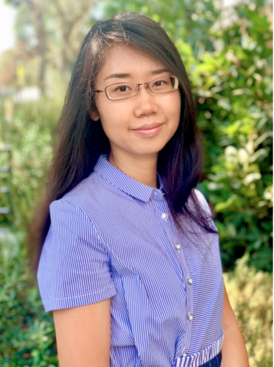
The five-year award will provide $558,329 in funding from July 2026 through June 2031 for Zhang’s project, “CAREER: Redefining Testing Foundations for Heterogeneity-Aware AI Compilation.”
Modern AI systems often run on specialized processors designed to handle massive computational workloads efficiently. Before deployment, software frameworks translate deep learning models so they can operate across different hardware environments.
“An AI model that appears valid at a high level can still fail during deployment because of hidden resource limits, data layout requirements, and platform-specific transformations,” Zhang said.
Some failures crash immediately. Others quietly change outputs while the system continues running.
“These failures are especially concerning because they may silently alter outputs rather than cause visible crashes, making them difficult to detect, diagnose, and prevent,” Zhang said.
Zhang’s research focuses on testing the software stack responsible for translating and executing AI models across heterogeneous computing systems, environments built from different types of processors and accelerators.
Her project develops methods to uncover hidden constraints inside AI deployment systems and generate tests aimed at the conditions most likely to trigger failures. The research also examines whether AI models produce consistent behavior across computing platforms expected to deliver the same results.
The work draws from Zhang’s background in both hardware and software engineering, an intersection she said remains understudied despite its growing importance to AI deployment.
“This project establishes a new testing foundation for AI deployment by bridging the gap between abstract tensor math and physical hardware,” Zhang said. “Our goal is to ensure that an AI system’s core intelligence translates faithfully from a researcher’s laptop to specialized chips, preventing silent failures as AI systems move into the physical world.”
The research could improve reliability in AI-driven manufacturing systems, autonomous technologies, and long-running AI agents that depend on stable performance across changing hardware environments.
The NSF CAREER Award also supports a new educational initiative at UC Riverside focused on AI deployment and compiler reliability. Zhang plans to develop coursework and research opportunities connecting software engineering, software testing, AI compilers, and hardware architecture.
Students participating in the program will contribute to open-source projects and study how AI models move from research environments into real-world computing systems.
“My journey from a hardware Ph.D. to a postdoctoral researcher in software engineering has shown me that many of the hardest computing problems exist between these layers,” Zhang said. “I am incredibly grateful to my colleagues and students at UCR who have embraced this work. Together, we are building foundations for dependable long-running agents, spatial AI systems, and autonomous technologies.”
The NSF CAREER program supports faculty members who combine research with education and workforce development. Zhang’s award reflects growing national interest in improving the reliability of AI systems as they become more deeply integrated into manufacturing, infrastructure, and autonomous technologies.