California’s universities generate hundreds of invention disclosures, patents, licensing agreements, and startup companies each year, helping drive one of the world’s largest innovation economies. Research volume alone, however, does not fully explain why some institutions produce stronger commercialization and economic outcomes than others.
That question sits at the center of a new study from UC Riverside engineering professor Mihri Ozkan, whose research examines how universities convert scientific discovery into patents, startups, licensing activity, and economic impact.
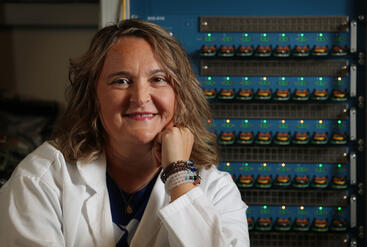
Published in Technology and Innovation, the journal of the National Academy of Inventors (NAI), the paper evaluates research-to-commercialization pathways across California’s higher education system — including invention disclosures, patent activity, licensing, startup formation, and broader economic impact — spanning institutions from Stanford and UCLA to emerging research campuses such as UC Riverside and UC Merced.
Ozkan, a professor of electrical and computer engineering in UC Riverside’s Marlan and Rosemary Bourns College of Engineering, co-authored the paper with Paul R. Sanberg, president of the National Academy of Inventors. The work grew out of Ozkan’s role as a 2025 NAI Invention Ambassador, a leadership position focused on collaboration, translational research, and inventor engagement across academic institutions.
“California hosts one of the world’s most powerful university-driven innovation ecosystems, yet innovation leadership is not determined solely by research scale,” Ozkan said. “Our work demonstrates that the efficiency with which universities translate research into patents, startups, licensing activity, and societal impact is equally important.”
The study analyzes invention disclosures, patent activity, licensing agreements, startup formation, and commercialization trends throughout California’s university system. It also examines how universities with different levels of research activity contribute to the state’s innovation capacity. Rather than ranking universities solely by total research volume, the study applies efficiency-normalized benchmarking frameworks to evaluate how effectively institutions convert research expenditures into commercialization outcomes and broader economic impact.
Among the paper’s key findings is the growing role of emerging and mid-scale research institutions in expanding California’s innovation ecosystem beyond traditional high-volume research centers.“The analysis highlights the growing role of emerging and mid-scale research campuses, including UC Riverside and BCOE, in expanding California’s innovation capacity beyond traditional high-volume research centers, particularly in areas connected to sustainability, clean energy, artificial intelligence, advanced materials, and translational engineering research,” Ozkan said.“One of the key messages emerging from our California analysis is that innovation ecosystems benefit from institutional diversity. Universities do not all contribute in the same way, and emerging innovation hubs such as UC Riverside are becoming increasingly important in expanding California’s statewide innovation capacity, talent development, and societal impact.”
Ozkan will continue those discussions at the National Academy of Inventors 15th Annual Conference in Los Angeles, where she will present alongside distinguished leaders in innovation and entrepreneurship during the “Patent to Business Panel: Where the Pipeline Breaks.”

At the conference, Ozkan will present findings from a second California innovation study titled “Beyond Scale: Efficiency and Economic Impact in California’s University Innovation System.” “The research introduces two benchmarking frameworks: the University Innovation Efficiency Index (UIEI), which measures innovation output efficiency relative to research expenditures, and the Economic Impact Proxy Efficiency (EIPE) framework, which links innovation efficiency to estimated economic impact.”
“One of the central findings of the study is that research scale alone does not determine innovation effectiveness,” Ozkan said. “Several mid-scale institutions demonstrated innovation efficiencies comparable to or exceeding much larger research-intensive universities when outputs were normalized relative to research expenditures.”
The analysis identified several institutional innovation models across California universities, including high-volume research systems, specialized commercialization ecosystems, and universities generating strong translational outcomes relative to institutional size.
The study found a strong positive association between innovation efficiency and estimated economic impact, suggesting that universities contribute to California’s economy through distinct research and commercialization strengths.
“California’s universities function as complementary components of a statewide innovation system,” Ozkan said. “Different institutions contribute distinct strengths in research translation, licensing, startup formation, and societal impact.”
The publication builds on Ozkan’s broader “Bridging Innovation” initiative developed through the National Academy of Inventors. The initiative focuses on strengthening collaboration among universities, inventors, policymakers, and industry leaders while expanding technology commercialization pathways across California campuses.
The framework may also be applied beyond California to compare university innovation ecosystems across other states and regions, supporting broader innovation-policy and economic-development analysis.
“Serving as an NAI Invention Ambassador has been an especially meaningful experience because it extends innovation leadership beyond individual research programs toward strengthening broader academic innovation ecosystems,” Ozkan said.
Together, the studies position California’s universities as complementary contributors to a statewide innovation system and provide a data-driven framework for understanding how research investment can be translated more effectively into patents, startups, licensing activity, and economic value.
Ozkan and her husband, Cengiz Ozkan, a professor of mechanical engineering at UCR, were named Fellows of the National Academy of Inventors, becoming the first married couple in the United States to receive the honor. The NAI Fellowship is the organization’s highest professional distinction, awarded solely to academic inventors whose patented innovations have demonstrated societal and economic impact.