A new collaborative research project led by UC Riverside bioengineering professor Jiayu Liao has received a $100,000 award from the City of Hope-UC Riverside Biomedical Research Initiative (CUBRI-UCR) to advance a promising approach for discovering next-generation therapies for cancer and other diseases.
The project, titled “Develop AI-enabling quantitative FRET (qFRET)-based high-throughput screening (HTS) technology for Ubiquitin E3-substrate interaction assay and new Molecular Glue (MG) discovery,” brings together researchers from the Marlan and Rosemary Bourns College of Engineering (BCOE) and City of Hope’s Beckman Research Institute.
Liao, a professor of bioengineering and biomedical sciences at UCR, is collaborating with David Horne, professor at the Beckman Research Institute at City of Hope, to develop a new technology platform that combines artificial intelligence (AI) with advanced fluorescence screening methods to accelerate drug discovery.
The research focuses on targeted protein degradation, an emerging therapeutic strategy that removes disease-causing proteins from cells instead of simply blocking their activity. Scientists believe this approach could help address diseases driven by proteins previously considered “undruggable.”
“This innovative AI-enabled qFRET platform addresses a major bottleneck in molecular glue discovery and could substantially advance the field of targeted protein degradation for cancer and other diseases,” Liao said.
The project aims to create an AI-enabled quantitative fluorescence resonance energy transfer, or qFRET, platform capable of rapidly identifying molecular glues, small molecules that redirect the body’s natural protein disposal system to eliminate harmful proteins. Researchers will use the platform to conduct high-throughput screening campaigns and evaluate how newly identified molecular glues degrade target proteins in mammalian cells.
Liao said the work could significantly accelerate therapeutic development.
“I believe this research will accelerate molecular glue research and therapeutic development,” he said.
By integrating AI-guided prediction with quantitative high-throughput screening, the team hopes to establish a scalable discovery platform that could support the development of precision medicines for cancer, neurodegenerative disorders, immune diseases, and other conditions.
In addition to advancing fundamental research in targeted protein degradation, the project could help expand the number of usable E3 ligases, proteins that help regulate cellular protein disposal, opening new possibilities for highly selective therapies with fewer side effects.
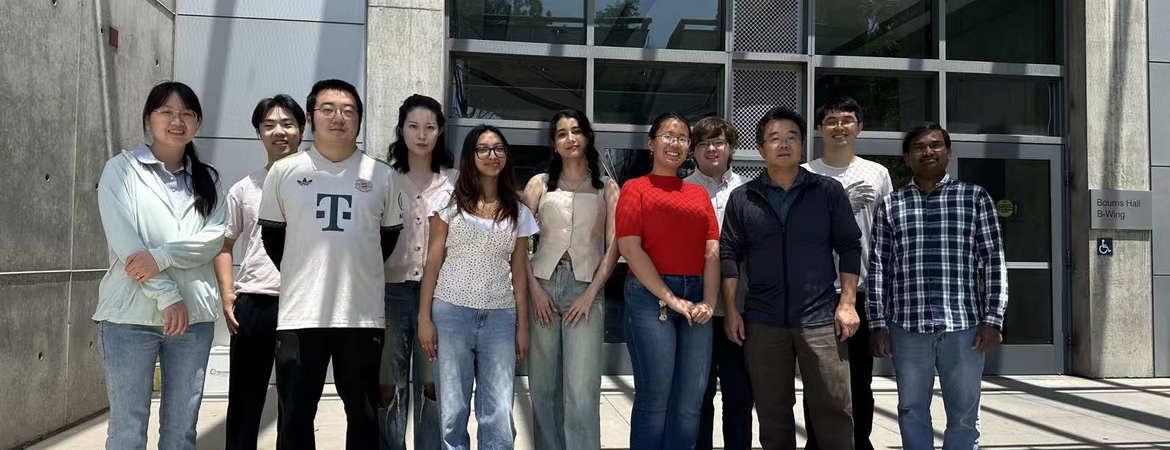
The collaboration also provides valuable research opportunities for emerging scientists at UCR and City of Hope. Team members include Chuchu Liu, a master’s student at UCR; Runrui Dang, a doctoral student at UCR; Duo Xu, a postdoctoral associate at UCR; and Holly Yin, a research professor at City of Hope.