An unexpected discovery during his undergraduate years helped set Ben Fellows on a career path he would follow for more than two decades. While working his way through college, he picked up a book on amateur radio from a shelf at his workplace. What began as a chance encounter sparked an interest in radio-frequency systems and wireless communications that would eventually lead him to graduate research at the University of California, Riverside, and a career supporting the U.S. Navy.

Ben had first been encouraged to pursue electrical engineering by a physics professor at another college. He later transferred to UCR, earning his bachelor's degree in electrical engineering in spring 2004. His growing interest in wireless technology brought him back in 2006 to pursue a master's degree, where he studied wireless mesh networks and WiMAX in the laboratory of Yingbo Hua, a distinguished professor of electrical and computer engineering.
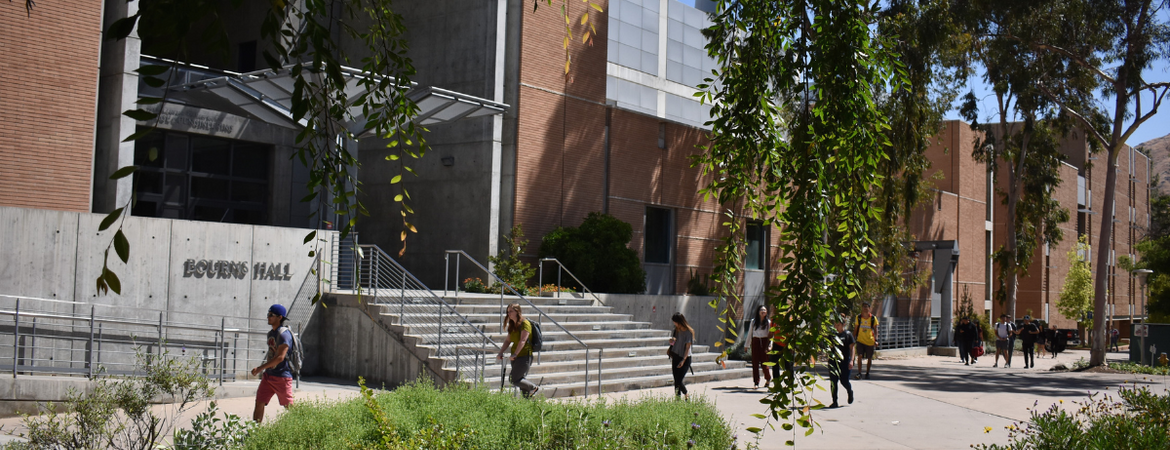
Beyond his technical studies, Ben remembers the support he received from faculty at UCR's Marlan and Rosemary Bourns College of Engineering.
"I have fond memories of the almost universal care that the professors had for the students," Ben said.
He remembers that commitment in the classroom, particularly in courses taught by Ilya Dumer, Hossny El-Sherief, and Bir Bhanu, whose enthusiasm for their subjects left a lasting impression. He found similar support in Hua's laboratory, where he appreciated his adviser's understanding that master's students often have different academic and professional goals than those pursuing doctoral degrees.
After completing his graduate studies, he began a three-year civilian engineering internship with the U.S. Navy's Naval Sea Systems Command before joining Naval Surface Warfare Center (NSWC) Corona Division.
His work has included radio communication systems, distributed sensing, data networks, and technologies used in military training environments. Over the years, he has worked on and led projects across the United States and the Pacific, helping support the systems and capabilities that military personnel rely on for training and readiness.
When Ben joined NSWC Corona, the group he supported was expanding rapidly. With previous professional experience and a master's degree behind him, he felt prepared to take on leadership responsibilities early in his Navy career. The growing organization also gave him opportunities to explore technologies related to his interests and contribute to new capabilities.
As with any rapidly growing organization, the opportunities came with challenges. Navigating shifting demands, funding priorities, and the growing pains of an expanding team, he came to see those experiences as an important part of his professional development.
"Experience (even when it may seem negative) builds confidence for future efforts," Ben said.
Throughout his career, he has found particular satisfaction in working alongside civilian and uniformed personnel who share a commitment to improving military readiness.
That experience has also shaped the advice Ben offers aspiring engineers. As artificial intelligence changes how students learn and engineers work, he believes a strong understanding of technical fundamentals and the ability to think critically are more valuable than ever.
"Technical fundamentals are more important than ever," Ben said. "Others depend on engineers to be diligent and provide competent outputs."
He also encourages students to remain curious and confident enough to seek guidance when they need it.
"Don't be afraid to ask questions even when it seems awkward," he said. "Systems thinking is essential."