Stroke can disrupt far more than the part of the brain directly injured. UC Riverside bioengineering assistant professor Shahab Vahdat is studying how that damage reshapes communication across the brain, brainstem, and spinal cord, work that earned him the 2026 Shu Chien Early Career Award.
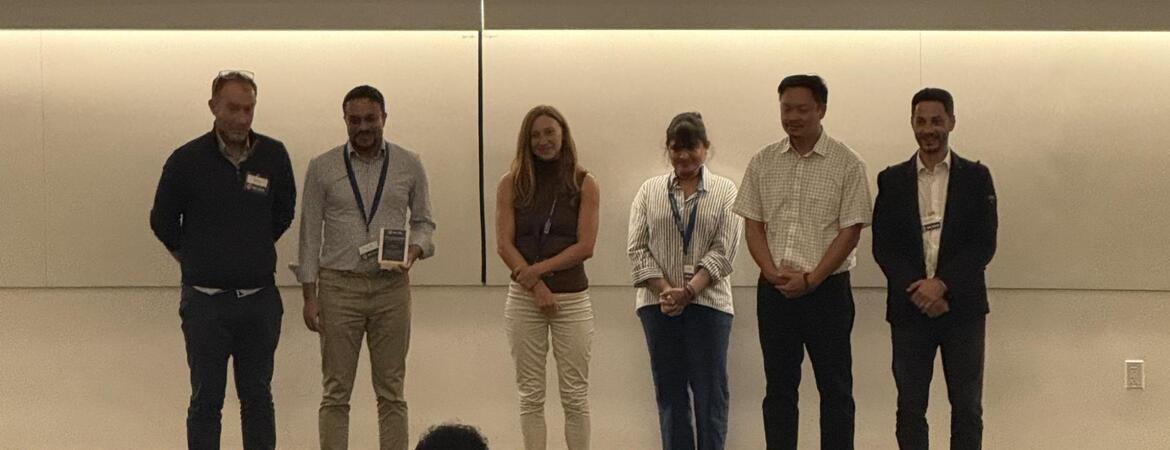
Vahdat, an assistant professor in the Marlan and Rosemary Bourns College of Engineering (BCOE) Department of Bioengineering, received the honor at the 26th annual UC Systemwide Bioengineering Symposium, held Aug. 22-23 at UC Santa Cruz. The award recognizes outstanding scholarly achievement among early-career UC bioengineering faculty.
“It is a great honor to receive the Shu Chien Early Career Award,” Vahdat said. “I am very grateful for this recognition and for the support of my students, colleagues, and collaborators who have contributed to our research.”
As the 2026 Shu Chien Early Career Award recipient, Vahdat presented “Simultaneous Brain and Spinal Cord fMRI Frameworks and Circuit-Level Reorganization Following Ischemic Injury,” highlighting how stroke can alter neural circuits far beyond the site of the original injury.
His work examines the networks involved in movement, including connections among the brain, brainstem, and spinal cord. To study how those networks change after stroke, Vahdat and his collaborators have developed advanced neuroimaging approaches, including simultaneous functional magnetic resonance imaging, or fMRI, of the brain and spinal cord. The approach allows researchers to examine activity across multiple parts of the central nervous system during the same study.
Vahdat’s research also extends into translational mouse models and quantitative methods for studying post-stroke spasticity, including hyperreflexia, or exaggerated reflex responses, and hypertonia, an abnormal increase in muscle tone.
Earlier this year, a UCR-led study by Vahdat and collaborators identified brainstem and upper spinal cord pathways involved in hand and arm movement in mice and humans. The findings offered additional insight into how movement depends on interconnected circuits extending beyond the brain.
Together, these studies are helping Vahdat’s group build a more complete picture of how brain, brainstem, and spinal circuits reorganize after stroke. A better understanding of those changes could help researchers identify neural pathways that may be targeted through neurostimulation to support motor recovery.
Vahdat joined UCR in 2024 and directs the Stroke NeuroRecovery Lab, where his research focuses on neural circuits and potential neurostimulation treatments for ischemic stroke.